



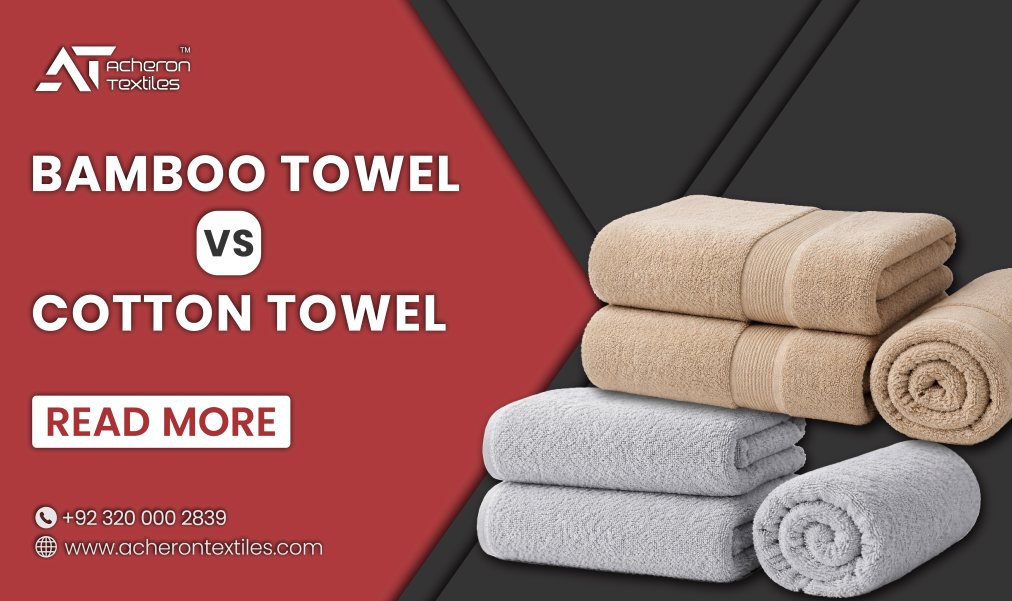
Selecting the right towel makes a noticeable difference in everyday comfort, daily-use practicality, and drying speed. Among the many options available, bamboo and cotton towels are popular because of their natural origins and key characteristics. This guide breaks down the differences between bamboo vs cotton towels and how they compare across multiple factors, including softness, absorbency, and maintenance, to help you make an informed decision.
What is a Bamboo Towel
A bamboo towel is made from natural bamboo fibres processed into a yarn that is extremely soft and comfortable against the skin. Bamboo towels have gained popularity in recent years because of their potential sustainability, making them an appealing choice for consumers looking for biodegradable materials and eco-friendly options.
Pros of Bamboo Towel
-
Immediate absorbency
-
Breathability
-
Eco-friendly
-
Silky texture
-
Natural antimicrobial properties
Cons of Bamboo Towel
-
Dries rapidly
-
Higher price
-
Fragile longevity
-
High maintenance
What is a Cotton Towel?
Cotton towels are a staple in every household, made from natural cotton fibers known for their exceptional durability, softness, and absorbency. Cotton is highly versatile and can be made in different weights, finishes, and weaves that affect the towel’s quality. For instance, Turkish and Egyptian cotton are prized for their long fibers, which result in softer towels with higher absorbency.
Pros of Cotton Towels
-
Exceptional durability
-
High absorbency
-
Budget friendly
-
Soft and comfortable
-
Good color retention
-
Easy maintenance
-
Multiple style variety
Cons of Cotton Towels
-
Becomes rough over time
-
Initial break-in period
-
Longer drying time
-
High-GSM cotton towels can feel heavier
Bamboo vs Cotton Towels—Key Differences
Let’s dig into various factors to compare bamboo and cotton towels for a better understanding.
Absorbency & Water Retention
When considering absorbent towels, both bamboo and cotton perform well, but for different reasons.
Bamboo towels have a naturally porous structure that offers excellent moisture absorption. Bamboo towels can hold up to three times their weight in water, wicking it away from the skin for a dry, refreshed feel. Moreover, it dries rapidly due to their breathable fibres, reducing the chance of bacterial growth or mildew buildup.
Cotton towels offer good absorbency but generally vary by the cotton type. Long-staple cotton fibres offer good absorbency but often take longer to dry, making them more prone to bacterial growth.
Softness Level
Bamboo towels have a silky, smooth texture, providing a comfortable fabric feel. Their exceptional cashmere-like softness and gentle texture add a spa-like indulgence to every bath. Moreover, bamboo towels retain their softness after multiple washes.
Cotton towels are valued for their plush, comforting texture, especially when made from high-quality cotton such as Turkish cotton. These high-quality cotton towels offer exceptional softness and a luxurious feel. However, low-quality cotton towels may become scratchy or stiff after repeated use if not cared for properly.
Antimicrobial Properties
Bamboo towels are prized for their natural antimicrobial properties, containing a bio-agent called “bamboo-kun” that exhibits such properties. Bamboo towels naturally resist the growth of bacteria, fungi and odour-causing microbes.
On the other hand, cotton does not naturally provide antimicrobial properties. Cotton towels are also generally prone to moisture retention, making them highly susceptible to becoming a breeding ground for bacteria if they are not dried properly between uses.
Environmental Impact
Bamboo is valued for its eco-friendly nature, as it is one of the fastest-growing plants on earth and requires minimal pesticides, water, or fertilizers. These towels, particularly bamboo-linen towels, are usually made using a mechanical process, making them a sustainable, chemical-free choice. As a result, cultivating and harvesting bamboo has a relatively low environmental footprint under suitable conditions. Moreover, bamboo is fully degradable, meaning it decomposes naturally rather than lingering in landfills.
Cotton is a natural and biodegradable fibre but generally has a heavier environmental impact in cultivation. Conventional cotton farming requires substantial water, fertilisers, and pesticides that can potentially harm the ecosystem. Organic cotton does resolve some of these concerns but is highly expensive. Also, cotton generally demands more water and agricultural land than bamboo when producing the equivalent amount of fibre.
Allergy-friendly Considerations
Bamboo towels are widely known for their hypoallergenic nature, making them highly suitable for people with sensitive skin. These towels are less likely to cause skin irritation and are ideal for people prone to skin allergies, including eczema or dust-related allergies.
Cotton towels are also generally gentle on the skin, but the finished product is often treated with chemical finishes or pesticides that can be concerning for highly sensitive individuals. Organic, untreated cotton can be a good option for people preferring hypoallergenic cotton.
Durability
Bamboo towels are durable but can break down sooner with heavy use and improper care. To extend their longevity, wash them gently in cool water and air-dry instead of using excessive heat. With proper care, bamboo towels can retain their softness and shape for years.
Cotton towels are highly durable, last longer than bamboo towels, and can withstand frequent washing and drying. Although they tend to shrink or pill over time, well-made premium cotton towels remain sturdy and reliable for many years.
Bamboo vs Cotton towels-Comparison Table
Here’s a quick comparison table highlighting all the key differences.
|
Features |
Bamboo Towel |
Cotton Towel |
|
Softness level |
Extremely soft, silky and smooth |
Soft, with many texture options |
|
absorbency |
Highly absorbent |
Moderate absorbency |
|
Breathable fabric |
Highly breathable |
Breathable, but denser fibre structure |
|
Drying |
Dries quickly |
Dries slower |
|
Antimicrobial properties |
Naturally antimicrobial |
Lacks antimicrobial properties |
|
Color retention |
Lower, fades faster |
Higher, Retains color |
|
Style variety |
Limited |
Wide range |
|
Cost |
Higher |
Lower, more affordable |
Towel Care Tips
Here are a few tips that can extend the life of both bamboo towels and cotton towels:
-
Wash before first use to improve their absorbency right away.
-
Choose air-drying your towels when possible, as it prevents mildew and musty odours.
-
Avoid fabric softener as it reduces the towel’s absorbency over time.
-
Don’t overload your washing machine, as it helps rinse your towels thoroughly and maintain their softness.
-
Completely dry your towels before folding and storing them.
Conclusion
Choosing between bamboo vs cotton towels depends on your personal preference and a few factors. Bamboo towels are a good option if you want an allergy-friendly, silky-soft feel and sustainability appeal. Cotton towels remain a reliable choice because of their exceptional durability, low-maintenance care, vibrant colour retention, and affordability.
At Acheron Textiles, we offer a wide range of premium towels, including cotton towels, bamboo towels, all-purpose towels, luxury towels and much more. By combining quality craftsmanship with reliable performance, our towels deliver exceptional durability, lasting performance, and excellent absorbency.