




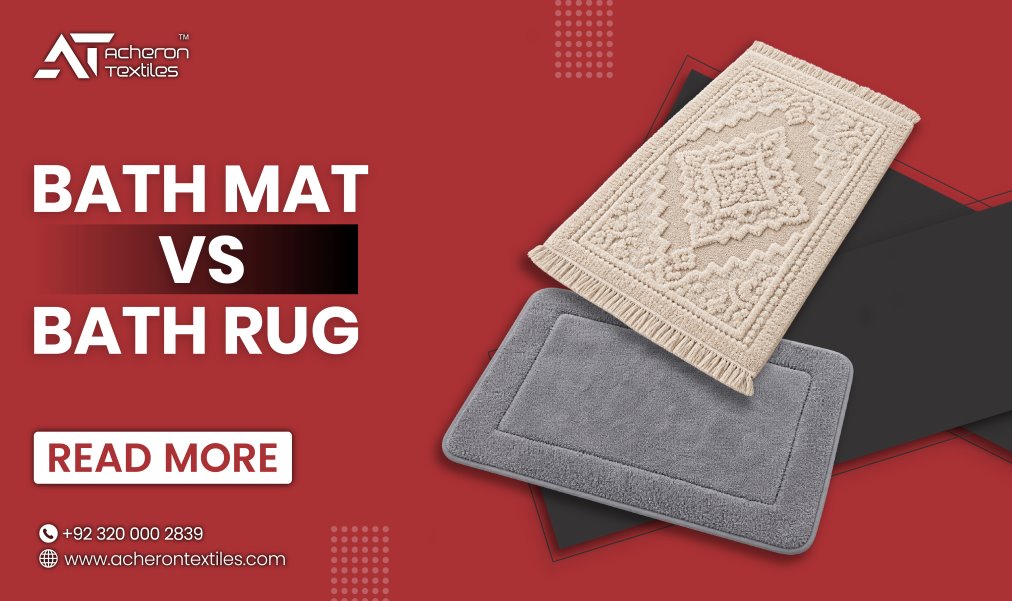
Walk into any home store, and you'll often see bath mats and bath rugs displayed side by side. Although they both look alike and cover the same bathroom floor to improve foot comfort, they generally serve distinct purposes. Understanding the difference between bath mats and bath rugs will help you choose the right one based on your requirements, appearance and budget. This guide focuses on bath mat vs bath rug, highlighting their key differences, functionality and characteristics to help you find the right one. Let's begin!
What is a Bath Mat?
A bath mat is designed for moisture management by absorbing drips, helping dry wet feet and helping protect bathroom surfaces from standing water. Bath mats are usually positioned right in front of the shower, bathtub, or sink to provide a comfortable, safer surface for stepping onto. They are ideal for daily use as they can be washed often and dry relatively quickly.
What is a Bath Rug?
A bath rug is usually a textile floor covering that focuses more on the decorative appeal while providing moisture absorption and comfort. Bath rugs typically have a thicker construction, a plusher feel, more cushioning and a decorative appeal. Unlike a basic bath mat, the primary purpose of bath rugs is to provide a soft, comfortable surface underfoot along with visual coordination with towels and décor.
Bath Mat vs Bath Rug: What's the Difference?
Here are some key factors that distinguish between a bath mat and bath rug.
Functionality
Functionality is the major attribute that makes a lot of difference between the two. A bath mat is designed to manage moisture, absorbing drips and splashes before they reach the tile, wood, or vinyl floor. Bath mats serve as the first line of floor protection, as they help prevent water from spreading across the bathroom floor.
A bath rug is designed to elevate your bathroom appeal more than absorbing a lot of moisture like bath mats. Bath rugs are decorative in nature and are usually used as a design element in the bathroom.
Comfort Level
Bath mats generally provide a lighter layer of cushioning and may feel cool and flat underfoot. However, high-quality cotton bath mats can offer a perfect balance between softness and absorbency, especially those made from chenille, bamboo and microfiber.
When it comes to comfort level, bath rugs win. Bath rugs have a deeper, plusher pile that feels exceptionally soft and luxurious underfoot, especially on chilly mornings.
Drying Time and Mildew Resistance
One of the crucial differences to consider is moisture management and drying time. If the drying time is longer, it can increase the chances of mildew development. A bath mat is generally designed to absorb excess water and moisture after a person steps out of a bath or shower. Thin bath mats dry quickly, which is essential for everyday usage and encourages mildew resistance.
Thicker bath rugs feel luxurious, but they have a long drying time. They remain damp and hold more moisture for an extended period, which can eventually develop unpleasant odours or cause mildew.
Design
Bath mats and bath rugs are available in a wide range of colors and styles, but they differ in terms of visual appeal and design patterns. Bath mat styles are more focused on functionality and practicality with a clean appearance. They are usually simple, with rectangular shapes, flat-weave surfaces, particularly cotton-terry, waffle weaves, and low-pile designs.
Bath rugs are usually more versatile and decorative. From shag and tufted styles to patterned, braided and oversized options, various rug styles serve as a focal point. If you prioritize bathroom décor, a bath rug gives you more room to experiment with textures, colors, and layered styling. Depending on your personal preference, you can also pair your rug with organic cotton bath towels to create a cohesive and polished bathroom look.
Durability
Durability relies on the construction rather than whether you call it a bath mat or bath rug. Features such as tightly woven cotton, reinforced stitching, higher GSM and reliable backing can help enhance the longevity of the product. However, cotton bath mats generally perform well with regular washing, while extra-plush bath rugs may flatten or shed faster without proper care.
When you are buying a bath mat or bath rug, always check its pile density, overall weight, edge finishing, and stitching quality.
Bath Mat vs. Bath Rug: Comparison Table
Here's a head-to-head comparison table between bath mat and bath rug for a better understanding:
|
Features |
Bath Mat |
Bath Rug |
|
Main purpose |
floor safety and water absorption |
comfort, bathroom décor |
|
thickness |
flat, thinner |
thicker, plusher |
|
drying time |
Faster |
Slower |
|
Absorbency |
Usually higher |
Moderate |
|
Maintenance |
Easy to wash |
Requires more care |
|
Design |
Practical, simple |
Wide range of decorative designs |
Safety Features
Safety features are an essential consideration when selecting bathroom textiles. You should always look for:
-
Non-slippery backing
-
Stitched edges to prevent tripping
-
Textured surfaces
-
Dense, flat and secure construction
-
Water-absorbent fibres
Material Choices
The material choices and fabric types matter in determining a bath mat or bath rug's performance. Therefore, you should always consider which material is better for your bathroom requirements. Here are some common fabric types used to manufacture bath mats and bath rugs:
-
Cotton – naturally absorbent, soft and breathable with quick-drying time.
-
Microfibre – exceptionally soft and lightweight, with strong water absorption.
-
Chenille – luxurious texture, soft, velvety, with good absorbency
-
Bamboo and cotton blends offer natural, textured looks with eco-friendly appeal, with limited water absorption.
-
Polyester and synthetic fabrics – durable, budget-friendly, and available in various styles.
Cleaning Methods and Maintenance
Proper cleaning and maintenance are crucial for keeping the bath mats and bath rugs hygienic, absorbent, and fresh. Most cotton bath mats are machine washable, making them convenient for household and commercial facilities. Here are some basic cleaning methods and maintenance tips that enhance the lifespan of your mats and rugs:
-
Follow the manufacturer's guidelines before the first wash.
-
Wash bath mats regularly in cool or warm water with mild detergent.
-
Avoid leaving wet mats on the floor for longer durations.
-
Dry mats and rugs thoroughly or tumble dry on low after washing.
-
Avoid fabric softeners, as they reduce absorption properties.
-
Wash every two weeks or weekly in busy bathrooms.
Final Thoughts
Bath mats and bath rugs are bathroom essentials that serve distinct purposes; the difference between them lies in their functionality, comfort, design, and construction. Bath mats generally focus on floor protection and water absorption, while bath rugs enhance the decorative appeal and styling of your bathroom. The right choice comes down to your personal preferences, applications, maintenance and budget options.
Acheron Textile offers an extensive range of bath mats and bath rugs in various dimensions and size options. From practical cotton bath mats for everyday use to luxurious and aesthetically appealing bath rugs for your bathroom décor, we've got it all. Whether you're sourcing for a spa, retail business, hotel, or household, selecting the right combination of bath mats and bath rugs can help you balance appearance, performance, comfort and cost. Contact us for further details.