



Effective wound care is crucial for helping damaged tissue recover, especially when healing is complicated or delayed. While minor wounds are easy to manage with simple protective coverings, more challenging cases, including chronic wounds, often require carefully selected dressings that actively support tissue repair, absorb wound fluid, and protect fragile tissues. The optimal choice of chronic wound dressing depends on several factors, including drainage levels, wound depth, and the phase of healing.
This blog aims to explore top wound dressings for chronic wounds, their unique characteristics, and when to use each to support better wound healing.
What are Chronic Wounds
Chronic wounds are wounds that do not heal within the expected time period. Such wounds may remain open for several weeks or even months because of underlying issues such as diabetes, poor circulation, infections, or other complications. Some common examples are:
-
Pressure injuries
-
Diabetic foot ulcers
-
Venous leg ulcers
-
Arterial ulcers
-
Complex traumatic wounds
A non-healing wound not only requires frequent dressing changes but also requires healthcare professionals to evaluate certain factors to understand why it is stalled. These factors include nutritional status, blood circulation, underlying disease, and the overall condition of the wound bed.
Top Wound Dressings for Chronic Wounds
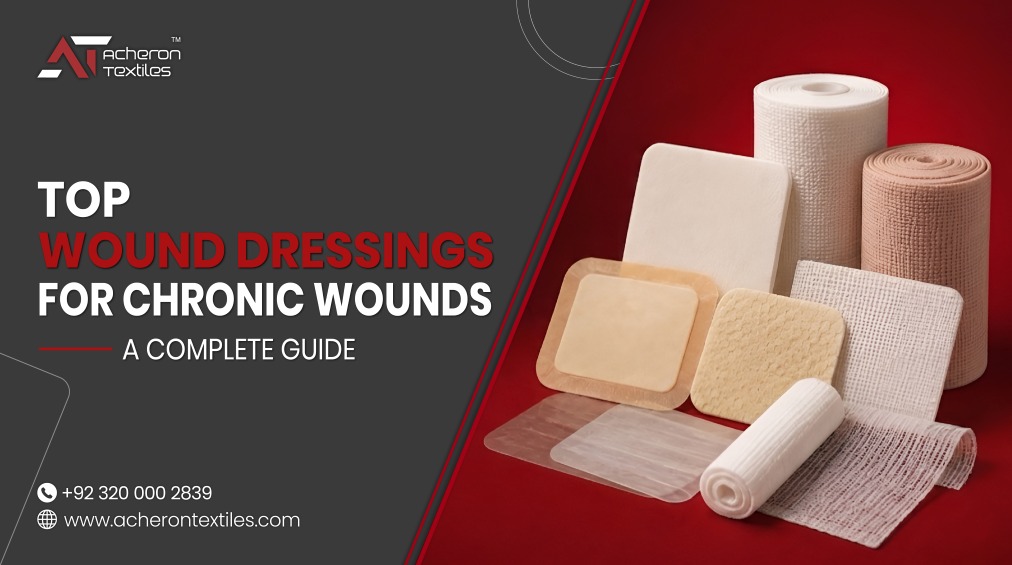
Here are some widely used chronic wound dressings and their key advantages:
Foam Dressings
Foam dressing products are made from polyurethane and offer high absorbency that makes them suitable for wounds with a moderate to heavy amount of exudate. This dressing generally features a semi-permeable outer layer that provides cushioning and protection while it draws wound fluid away from the wound surface. They are frequently useful for:
-
Traumatic wounds and surgical incisions.
-
Pressure injuries, leg ulcers and diabetic foot ulcers
-
Skin tears requiring both absorption and physical protection
-
Maintaining a moist wound environment
Foam dressings are usually chosen based on the wound’s depth and exudate level, with regular monitoring to ensure proper dressing adhesion and adequate drainage.
Hydrocolloid Dressing
Hydrocolloid dressings comprise an absorbent pad with gel-forming agents that interact with the wound fluid, creating a gel-like layer over the wound bed. This layer helps establish a moist environment that promotes granulation tissue formation and protects the wound from external contamination. Additionally, these dressings reduce discomfort during dressing changes as the adhesive layer secures firmly while preventing trauma to the wound bed. These dressings are generally suitable for wounds with low to moderate exudate and are considered for:
-
Partial thickness wounds and abrasions
-
Pressure ulcers in early to mid stages
-
Diabetic foot ulcers and minor burns with low to moderate exudate
Hydrocolloid dressings must be changed frequently to maintain appropriate moisture balance and prevent skin irritation, maceration, or leakage.
Alginate Dressing
Alginate dressings are derived from highly absorbent seaweed fibers, making them suitable for wounds with substantial exudate. These dressings contain sodium and calcium ions that form a soft gel upon contact with wound exudate. Also, these dressings are flexible enough to easily conform to irregular wound surfaces, making them suitable for moderate-to-heavily draining wounds. Alginate dressings are greatly useful for:
-
Traumatic injuries, surgical wounds
-
Deep wounds with heavy exudate
-
Cavity wounds
-
Chronic wounds, including pressure ulcers and venous leg ulcers
Alginate dressings must be replaced regularly to maintain appropriate moisture balance and prevent maceration or leakage.
Hydrogel Dressing
Hydrogel dressings contain a high proportion of water or glycerine-based formulations that make them ideal for dry wounds or those with minimal drainage. Also, these dressings support autolytic debridement, a moist healing environment, and help reduce discomfort and pain. Hydrogel dressings are recommended for:
-
Dehydrated wounds such as diabetic foot ulcers, pressure ulcers, or radiation dermatitis
-
Wounds requiring moisture donation
-
Sloughy or necrotic wounds
-
Painful wounds for a soothing effect
Hydrogel dressings are essential for moist wound healing in wounds with insufficient natural hydration by rehydrating dry wound beds. However, regular assessment is crucial to maintain appropriate moisture levels and prevent maceration of the surrounding skin.
Antimicrobial and Silver Dressing
When there is a suspicion of infected wounds or a high bacterial burden on the wound, an antimicrobial dressing becomes necessary. Silver dressings comprise the antimicrobial properties of silver to prevent microbial burden and treat wound infections. These dressings contain silver in various forms, including ions, particles, or compounds that are effective against a wide range of fungi and bacteria. These dressings are commonly indicated for:
-
Necrotic wounds and burns have a heightened risk of infection and delayed healing.
-
Chronic wounds with high infection risk, such as diabetic ulcers
-
Pressure ulcers and traumatic wounds
Silver dressings must be used appropriately for a limited duration, with clinical recommendations and regular wound assessment. This is crucial to minimize the risk of silver toxicity and promote optimal wound healing.
Non-Adherent Dressing
A non-adherent dressing is designed to avoid sticking to the wound bed while minimizing pain and trauma during dressing changes. These dressings are highly suitable for sensitive, fragile, or easily damaged wounds and protect fragile new tissues during dressing changes. They are available as sheets, pads, and strips that are made from materials such as silicone or low-adherent fabrics that do not adhere to the wound bed. These dressings are commonly used for:
-
Creating a primary protective layer beneath a secondary dressing to prevent sticking.
-
Wounds with delicate granulation tissue.
-
Skin grafts, burns, and donor sites to protect from further tissue trauma.
-
Reducing discomfort and pain during dressing changes.
The appropriate non-adherent dressing should be selected based on the wound characteristics and the patient’s comfort needs.
Choosing the Right Chronic Wound Dressing
Here’s a quick reference table to choose the chronic wound dressing according to the wound characteristics:
|
Wound Characteristics |
Recommended Dressing Type |
|
Dry or necrotic wound bed |
Hydrogel dressing |
|
Low-to-moderate exudate/ Shallow wound requiring a protective barrier |
Hydrocolloid dressing |
|
Moderate-to-heavy exudate/ Wounds that need cushioning |
Foam dressing |
|
heavy exudate |
Alginate or other highly absorbent dressing |
|
Infected wounds |
Antimicrobial or Silver dressing |
|
Fragile wound surface |
Non-adherent dressing |
Additional Tips for Chronic Wound Dressing
Effective wound care is essential for optimal healing and minimizing the risk of complications. Here are some tips for chronic wound dressing:
-
Select the appropriate dressing based on the wound type, exudate level, wound depth, and signs of infection.
-
Cleanse the wound gently with a clinically appropriate wound-cleansing solution and remove any debris, excess exudate, and contaminants.
-
Apply the chronic wound dressing with utmost care, following the manufacturer’s guidelines without undue tension.
-
Monitor wound changes regularly, including wound size, drainage, swelling, redness, and other signs that may indicate infection or delayed healing.
-
Change the dressing at the recommended intervals and maintain a consistent care routine with a regular follow-up appointment if needed.
Conclusion
The choice of the right chronic wound dressing depends on multiple factors, including wound depth, signs of infection, exudate amount, and the patient’s overall condition. The main objective is to establish an environment that manages exudate, protects developing tissues, and supports tissue repair and wound healing. Moreover, using the right wound dressing at the right stage of wound healing can significantly support better healing outcomes.
Acheron Textile offers a wide range of wound dressings designed to support effective wound care across different types of healing stages and wound types. From everyday wound management to specialized wound dressings for complex or chronic wounds, our products are designed to support every stage of the healing process.