



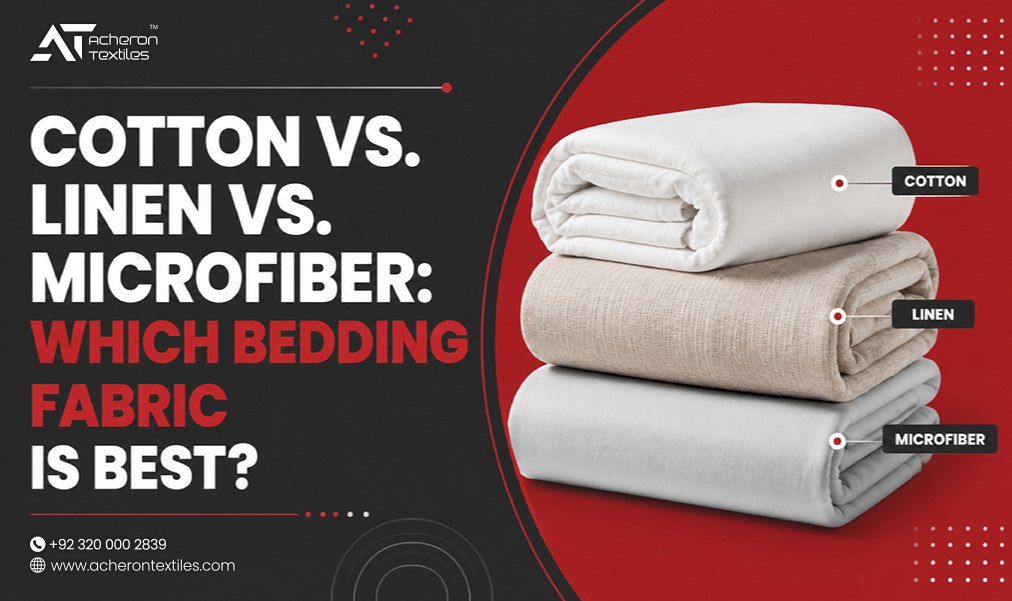
When it comes to choosing the bedding, fabric matters just as much as color and design. Some fabrics offer a cool, crisp feel, while others offer a smooth, soft texture or a naturally elegant touch to your bedroom. With so many options available, many buyers are often confused about which bedding fabric is best, cotton, linen, or microfiber. In this guide, we will compare cotton, linen, and microfiber to help you decide which one best suits your personal preferences.
Understanding Cotton Bedding
Cotton remains the undisputed favorite and most widely used bedding material for its breathability and softness. It is made from a natural fiber derived from the cotton plant, which absorbs moisture easily and remains gentle on the skin.
Cotton pros
-
Natural material
-
Sustainable option (if organic)
-
Breathable, absorbs moisture
-
Ideal for all seasons
-
Durable with proper care
-
Soft and comfortable feel
Cotton Cons
-
Can wrinkle easily after washing
-
Higher price point
-
Greater tendency to shrink
Understanding Linen Bedding
Linen, another popular material derived from the flax plant, is known for its luxurious appearance and excellent temperature regulation. It is considered the gold standard for hot-weather bedding. Also, many interior designers recommend linen as a top bedsheet fabric due to its distinctive aging. It gets softer and more comfortable with every single wash.
Linen Pros
-
Biodegradable
-
Exceptional breathability and airflow
-
Distinctive textured appearance
-
Becomes soft after washing
-
Luxurious
-
Moisture-wicking properties
Linen Cons
-
Highly expensive
-
Wrinkles easily
-
May shrink if not washed or cared for
-
Heavier feel
-
Requires extra care while washing and drying
Understanding Microfiber
Microfiber is made from finely woven synthetic fibers, typically polyester or nylon. They are usually smooth, wrinkle-resistant, and budget-friendly options. Moreover, microfiber bedding is valued for its appeal, crisp look, and low-maintenance characteristics. However, as they are not made from natural fibers, they can trap heat easily and are not a good option for hot sleepers.
Microfiber Pros
-
Lightweight construction
-
Quick drying capacity
-
Smooth texture
-
Wrinkle resistance
-
Budget-friendly option
-
Easy maintenance
Microfiber Cons
-
Less breathable, can trap heat easily
-
Less durable
-
Made of synthetic materials
-
might contain harsh chemicals and dyes
-
Lacks eco-friendliness
Cotton vs. Linen: Which one is better
The choice between cotton and linen often depends on personal preferences and environmental conditions. Here are some head-to-head differences between the fabrics:
|
Features |
Cotton |
Linen |
|
Breathability |
High |
Superior |
|
Softness |
Naturally soft |
Textured initially, but softens over time |
|
Durability |
Good |
Exceptional |
|
Moisture-wicking properties |
High |
Very High |
|
Cost |
More affordable |
More expensive |
|
Wrinkle resistance |
Moderate |
Lower |
If you prefer luxurious softness, enhanced cooling, and exceptional durability, then linen is a good option. On the other hand, if you want a budget-friendly, versatile option suitable for all year round with immediate softness, cotton is a better choice.
Cotton vs. Microfiber: Which is better
Cotton and microfiber fabrics offer different characteristics, breathability, and overall chemistry. Let’s break down their major differences:
|
Features |
Cotton |
Microfiber |
|
Softness |
Soft and natural |
Soft and lightweight |
|
Material type |
Natural |
Synthetic |
|
Moisture absorption |
Excellent |
Lower |
|
Breathability |
High |
Low |
|
Durability |
Strong |
Weak |
|
Price |
Moderate |
Low cost |
|
Wrinkle resistance |
Low |
High |
If you prefer a breathable, temperature-regulating, and hypoallergenic option, choose organic cotton. If you are seeking an affordable option with easy maintenance, microfiber bedding can be a good choice.
Linen vs Microfiber: Which is better
Comparing linen vs. microfiber highlights significant differences in performance and comfort. Let’s dig in:
|
Features |
Linen |
Microfiber |
|
Breathability |
High |
Low |
|
Temperature regulation |
Superior |
Average |
|
Moisture absorption |
Excellent |
Lower |
|
Durability |
Higher |
Low |
|
Price |
Expensive |
Low-budget |
|
Texture |
Naturally textured |
Smooth |
|
Maintenance |
High |
Low |
Linen performs better in terms of long-term value, breathability, and durability. Whereas microfiber is an attractive option for consumers prioritizing budget-friendliness, low maintenance, and a smooth texture.
Factors to Consider Before Selecting Bedding Fabric
Before choosing between cotton vs. microfiber, cotton vs. linen, or linen vs. microfiber, you must consider:
-
Maintenance: It is generally wrinkle-free and requires less maintenance than natural fibers.
-
Comfort preferences: Some people prefer the softness of cotton, while others prefer the crisp texture of linen.
-
Budget: Linen falls into the premium category, whereas microfiber is the most budget-friendly option.
-
Durability: Among these materials, linen offers the longest lifespan when washed properly and handled with care.
-
Climate: Consider choosing breathable options, such as linen and cotton, if your climate is hot, as they offer excellent moisture-wicking properties. On the contrary, microfibers are made of synthetic fibers that trap heat and provide additional warmth.
Conclusion
There is no universal answer to “cotton vs. linen vs. microfiber, which bedding fabric is best” because different consumers have different needs. All fabric materials have unique characteristics, strengths, and weaknesses. The right choice depends only on your budget, aesthetic preferences, and temperature needs. However, if you prefer breathable, soft, and cooling fabric, cotton is a great choice. Linen is an ideal choice if you demand the highest level of airflow with a luxurious feel. For those living in cooler climates who want affordable, low-maintenance sheets that offer softness, microfiber bedding can be a practical solution.
As a textile manufacturing company, Acheron Textile offers a diverse range of bedding fabrics that meet specific market demands and personal preferences. We provide a wide range of premium cotton, linen, and microfiber solutions designed to meet evolving market demands, offering comfort, performance, and durability.