



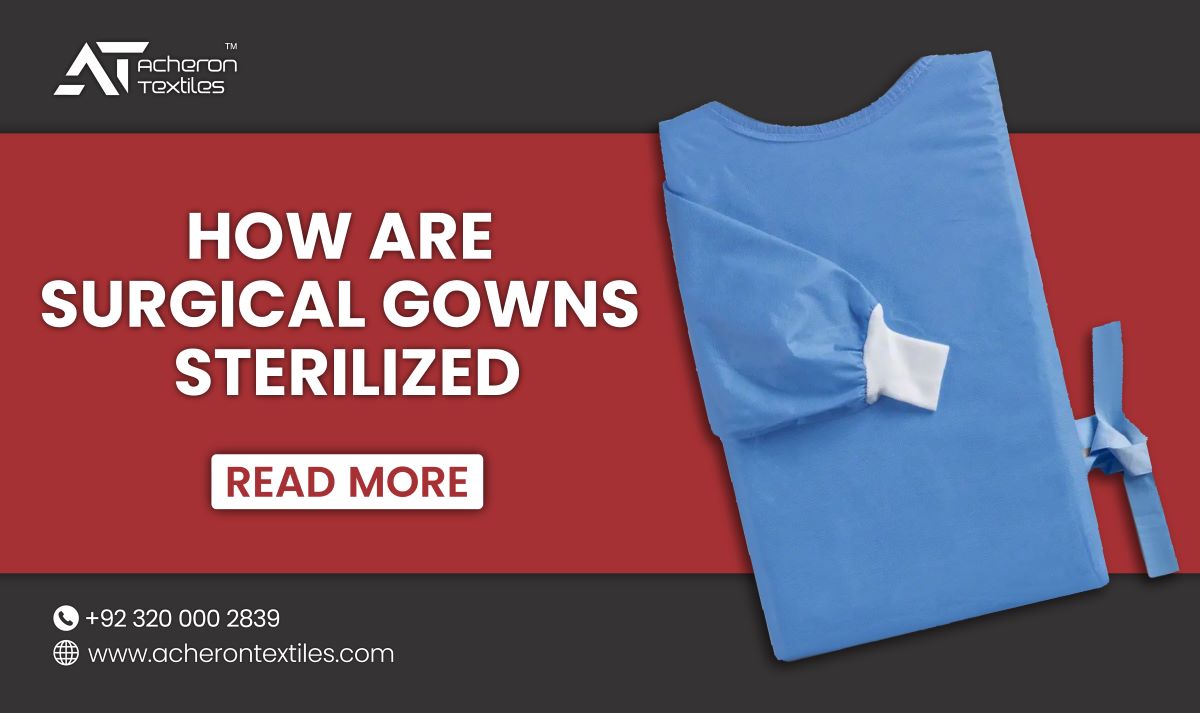
Surgical gowns are of prime importance during surgeries, as they serve as a protective barrier against bodily fluids, microorganisms, and airborne particles. Sterilization of surgical gowns is crucial in maintaining effective infection-control standards. This process involves a highly controlled, advanced, and strictly regulated process designed to ensure maximum staff and patient safety. In this blog, we will explore how surgical gowns are sterilized, the various methods used, and why this is important. Let’s begin:
How Are Surgical Gowns Sterilized and Cleaned
First, we need to clear the confusion between “clean” and “sterilize” a gown.
-
Cleaning a surgical gown means removing all visible dirt, biological matter, and debris from its surface. It typically involves laundering with water, detergent, and mechanical action, reducing the number of microorganisms but not eliminating them entirely.
-
Sterilizing a surgical gown is a scientifically validated process that destroys all forms of microbial life, including the most resistant bacterial spores.
Why Does the Sterilization of Surgical Gowns Matter
The operating room is one of the most infection-vulnerable areas in healthcare settings. During surgery, healthcare professionals and medical staff are exposed to the open surgical site, which can make their clothing susceptible to harmful pathogens. If surgical gowns are not sterilized properly, these harmful pathogens can transfer from the gown surface to the patient, causing Surgical Site Infections (SSIs). Sterilization of surgical gowns is crucial for:
-
Improved patient safety
-
Reducing the risk of Surgical Site Infections (SSIs)
-
Maintaining sterile operating conditions
-
Protecting healthcare workers
-
Compliance with healthcare regulations
Types of Surgical Gowns
Before we dive into sterilization methods, it’s important to know the two main categories of surgical gowns:
-
Disposable surgical gowns: These gowns are pre-sterilized by the manufacturer and made from synthetic materials such as polypropylene or SMS fabric (spunbond-meltblown-spunbond). These sterile disposable gowns are intended for single use and are to be disposed of after the procedure.
-
Reusable surgical gowns: These are made from durable woven fabrics or polyester blends and are cleaned and sterilized after every use at the hospital.
Common Surgical Gown Sterilization Methods
Whether it’s a reusable or disposable surgical gown, different sterilization methods are used depending on the intended use, the gown's material, and the manufacturing process. Here are the common techniques used:
Steam sterilization (autoclaving)
Steam sterilization is the most common and widely used technique for reusable surgical gowns. This method uses pressurized steam at extremely high temperatures (121 °C to 134 °C) to destroy bacteria, viruses, fungi, and spores. Moreover, the surgical gowns are exposed to this heat for around 15 to 30 minutes, depending on the temperature and load configuration.
Advantages
-
Environment friendly
-
Highly effective and reliable
-
Fast sterilization cycle
-
Cost-effective for hospitals
Ethylene Oxide (Gas Sterilization)
Certain gown materials cannot withstand the high heat of autoclaving, including synthetic fibers or specific disposable gown materials. Therefore, they are exposed to Ethylene Oxide gas in a sealed chamber. EtO is a highly reactive chemical that attacks the DNA of viruses and bacteria, preventing their replication. This process takes place at low temperature (37 °C to 63 °C) over a cycle lasting approximately 1.5 to 5 hours. This is followed by an aeration period of 12 to 48 hours to allow the gas to dissipate to safe levels.
Advanatges
-
Best for delicate or heat-sensitive materials
-
Ideal for pre-packaged sterile surgical gowns
-
Excellent penetration ability
Gamma Radiation Sterilization
Large-scale manufacturing of single-use surgical gowns frequently uses gamma radiation sterilization. It is a high-energy radiation emitted by cobalt-60 radioactive isotopes. In this process, the sealed pallets of gowns are conveyed onto a conveyor belt into a concrete chamber containing a radioactive source. The high-energy gamma rays penetrate the gown material and its packaging, disrupting the DNA of any living organism at the molecular level.
Advantages
-
Incredibly fast and highly efficient method
-
Produces no chemical residue
-
Suitable for sealed packaging
-
Ideal for mass production
-
No heat or moisture involved
Hydrogen Peroxide Plasma (Hâ‚‚Oâ‚‚)
This is an advanced, increasingly popular sterilization method that uses vaporized hydrogen peroxide at low temperature. This process creates a plasma that oxidizes microbial components. It is gentler on heat-sensitive materials than steam sterilization and is widely used in hospital centres’ sterile departments. Moreover, it is a fast and operationally efficient method with a cycle time generally ranging from 28 to 75 minutes, producing only water and oxygen as byproducts.
Advantages
-
Low-temperature process
-
Fast sterilization cycle
-
Safe for sensitive materials
Storage and Handling
Achieving sterility accomplishes half a mission. The next crucial step is to preserve that sterile state with proper handling and storage. Sterile surgical gowns are carefully packed and stored in a dry, clean, and temperature-controlled area away from moisture and direct sunlight. Most healthcare facilities have specialized sterile storage areas where packages are shelved to avoid compression damage to the barrier wrap. Moreover, the medical staff is trained to verify packaging integrity immediately prior to opening. Any tears, broken seals, or moisture stains require the gown to be sterilized again or discarded.
Conclusion
A surgical gown goes through a long journey before it's ready for use. Sterilization of surgical gowns is a multi-method, validation-driven process that eliminates all microorganisms, ensuring the safety of medical staff and patients. Using a sterile surgical gown is an essential part of infection control that helps prevent the spread of diseases in the healthcare industry.
Acheron Textile offers a wide range of sterile disposable gowns and reusable gowns that meet the rigorous international standards for breathability, fluid resistance, and microbial barrier protection. We adhere to quality standards, including ISO 11135, ISO 11137, AAMI PB70, and EN 13795 standards to deliver surgical gowns that meet the demands of hospitals and clinical environments. Partner with Acheron Textile if you don’t want to compromise on quality and barrier protection. Request a sample or quote today!