



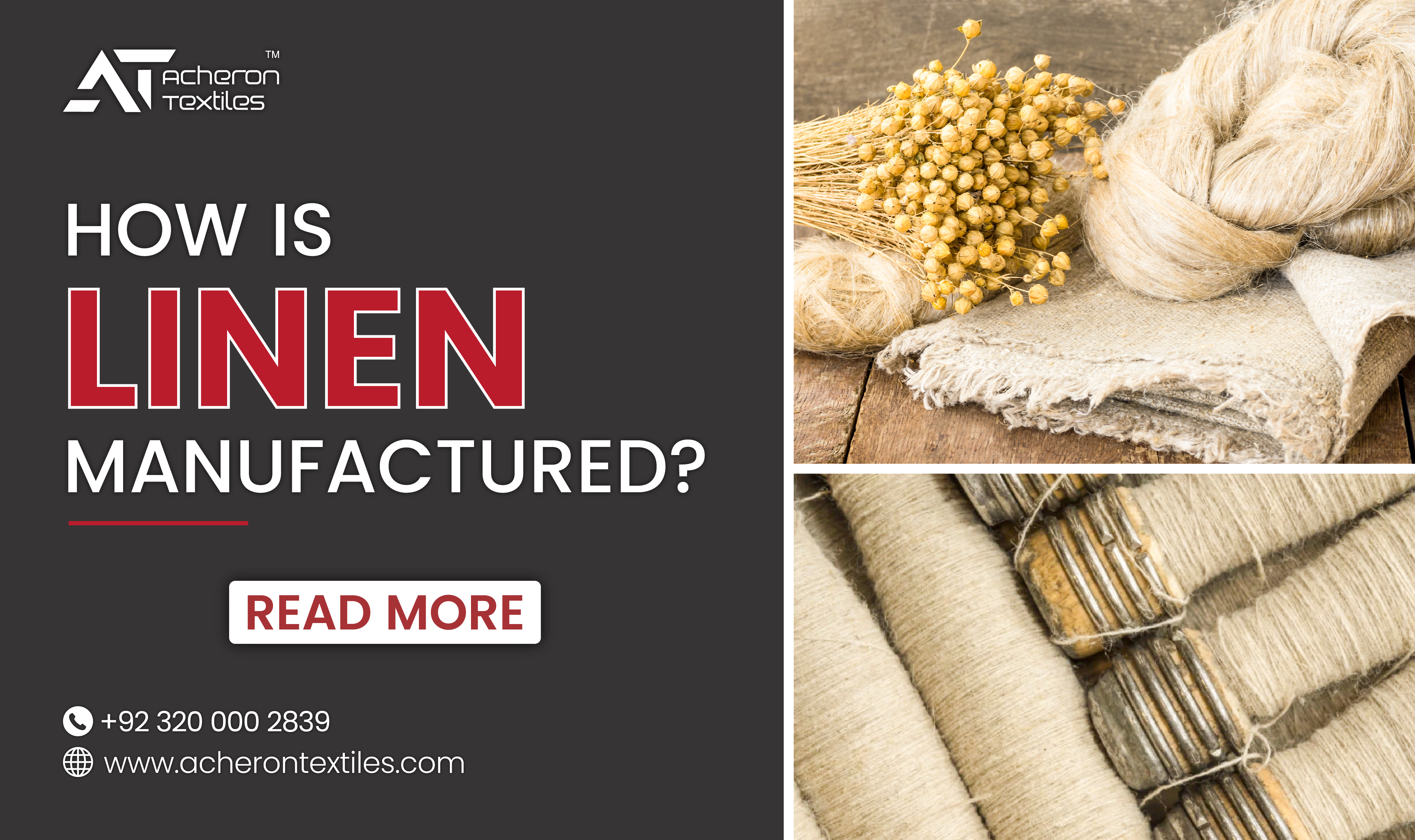
Linen is one of the most valued and oldest textiles in the world, known for its breathability, durability, and natural elegance. But have you ever wondered, how is linen obtained, what plant makes linen, and how do you make linen? This blog explores the full journey of linen from its origin to the final product. So, let’s begin!
What Plant Makes Linen
Linen comes from a versatile crop, the flax plant (Linum usitatissimum), cultivated for thousands of years. This plant is the foundation of all linen textiles. The fibers used in linen come from the flax plant’s stem. However, its seeds are used for oil and nutrition, not textile fiber.
Origin of Linen Fibre
The origin of linen fibre dates back over 30,000 years to ancient civilizations such as Mesopotamia and Egypt. It was considered a symbol of wealth, purity, and the divine. Also, it was valued for its ability to stay cool in hot climates. Although ancient Egyptian lines were rougher than modern varieties, they were used for clothing, furnishings, currency, and decorations. Also, it was famously wrapped around the bodies of mummies as a burial shroud.
Even today, linen remains a premium fabric due to its sustainability and heritage.
How Is Linen Manufactured: Step by Step
From a seed in the soil to a bolt of finished cloth, the flax plant goes through different stages to obtain linen. Let’s discuss them step by step:
Stage 1: Sowing & Cultivation
The journey of manufacturing linen begins with patience. Flax is sown densely in spring and takes around 100 days to mature. Because of the high planting density, the stalks grow tall and straight rather than branching, producing longer and finer fibers. Unlike many crops, flax doesn’t need much water and thrives in temperate climates with moist springs.
Stage 2: Harvesting
When the lower part of the stalk turns yellow and the seed turns brown, flax is pulled from the ground, not cut. This is done to preserve the full length of the stalk, producing longer, stronger, and smoother yarn.
Stage 3: Retting
This is the most critical phase of how you make linen. Retting is a process that uses moisture and microbes (water, dew, or enzymes) to break down the outer layers, loosening the fibers from the woody core of the stalk. There are two primary methods:
-
Dew Retting: Stalks are spread across the fields and exposed to morning dew and rain for 3 to 7 weeks. This method is slower and weather-dependent but produces softer, more uniform fiber.
-
Water Retting: In this method, stalks are submerged in clean water, pools, or tanks for 1 to 4 weeks. The bacteria break down the pectin and produce the finest-quality Belgian linen. This process is faster but requires pollution control.
-
Chemical Retting: This method uses industrial alkali solutions to accelerate the breakdown process. This process is the quickest, taking about hours to days, but it can weaken the fiber if poorly controlled.
Stage 4: Breaking and Scutching
After retting and drying, the flax stalks pass through breaking rollers that crack and shatter the brittle woody core (the shive) into small pieces without damaging the fibers. It is then followed by the scotching process, in which the stalks are beaten and scraped to remove woody fragments, leaving behind long, golden-line fiber (for fine fabrics) and shorter tow fibers (for rougher goods).
Stage 5: Hackling
The fiber undergoes a process called hackling to make the linen soft enough for clothing. The fiber is drawn through progressively finer metal combs called hackles. This step serves two main purposes:
-
Separates the long “line” fibers from the shorter “tow” fibers.
-
Aligns the long fibers into parallel bundles.
The resulting material is called strick, which is a shiny, silvery-golden strand. The shorter tow fibers are also used, typically for producing coarser line products and yarn blends.
Stage 6: Spinning
The aligned fibers (stricks) are fed into spinning frames to create linen yarn. Two common spinning methods include:
-
Dry spinning: produces a coarser yarn used for heavier fabrics such as canvas
-
Wet spinning: Produces the finest quality, fine, smoother threads. The fibers pass through hot water just before twisting, which softens the natural pectin, producing crisp, lustrous linen commonly used in bed linens, shirts, and tablecloths.
Stage 7: Weaving
Linen yarn is woven on power looms or hand looms, producing a range of linen textures and weights. The most common weave structure is the plain weave, where warp and weft threads interlace in a one-over-one-under pattern, giving classic linen its signature texture. For functional or decorative purposes, alternative weaver options such as damask, twill, and huckaback can be considered. At this stage, the fabric retains its natural ecru color (off-white to tan hue).
Stage 8: Finishing
Raw linen undergoes a few finishing steps before becoming fabric. This includes washing to remove impurities, followed by bleaching using chlorine-free chemicals or sunlight. Afterwards, the linen is softened using repeated tumbling or chemical treatments. At this point, the fabric can be dyed, printed, or left natural. To prevent the risk of early shrinkage during its first few home launderings, high-quality linen is often pre-washed before it reaches the customer.
Conclusion
From the moment a flaxseed is sown into the soil to the moment the finished cloth is folded on a shelf, linen undergoes at least eight major stages over many months. What results isn’t just about the fabric, but is a testament to sustainability, durability, and human history. So, the next time you sleep between the linen sheets or wear a linen shirt, remember that you’re holding something that connects to the very roots of civilization.
At Acheron Textile, we honor every step of the linen manufacturing journey. That’s why we source only the finest flax, combined with modern manufacturing expertise, to ensure every piece of linen meets the highest expectations for comfort, finish, and durability. Contact us now if you’re looking for reliable, high-quality linen tailored to your business requirements.