



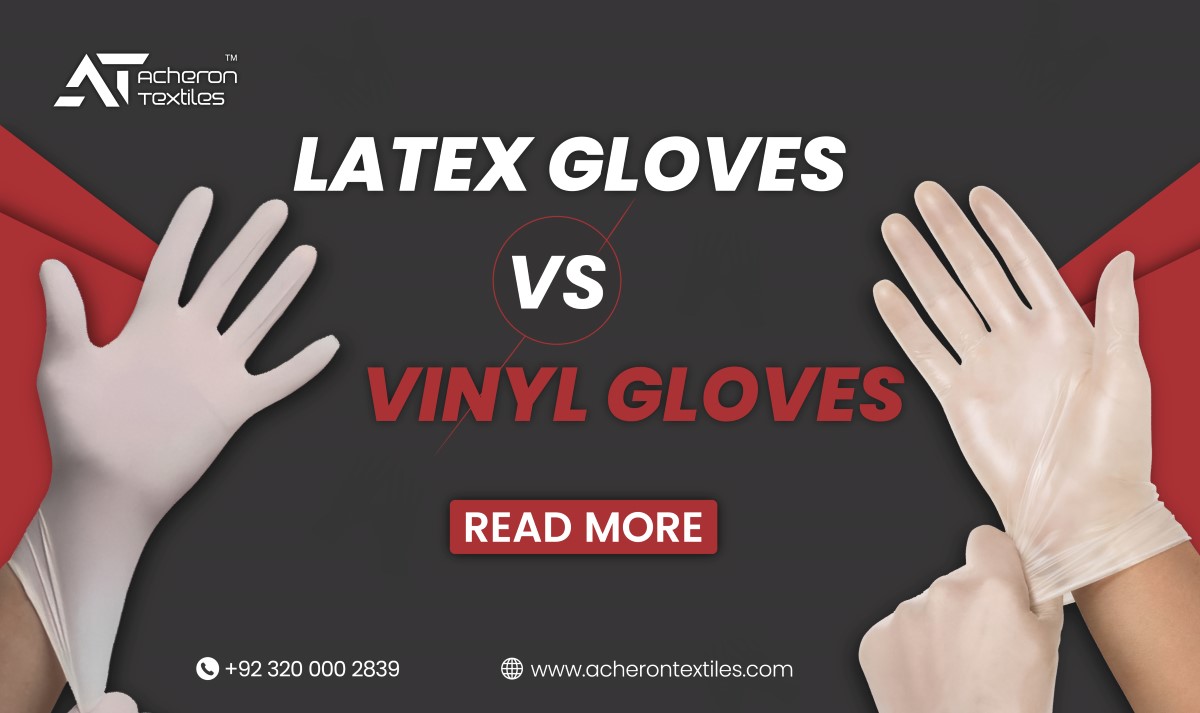
Disposable gloves are essential across various environments, including manufacturing, healthcare, food processing, industrial, and laboratory settings. Selecting the right gloves is crucial for maintaining hygiene, comfort, and safety in any workplace. However, not all gloves are created equal. The two most common and widely used disposable gloves are latex and vinyl. Both gloves provide barrier protection but cater to different needs and environments. This guide aims to break down the latex gloves vs vinyl gloves differences, pros, and cons to help you make a smart purchasing decision.
What are Latex Gloves
Latex gloves are made of natural rubber latex derived from the sap of rubber trees. This material gives them their signature elasticity, form-fitting comfort, and high sensitivity, making them ideal for precision tasks. These gloves are among the most widely used in medical and industrial environments.
Latex Gloves Types
There are several types of latex gloves available for different tasks:
-
Powder-free latex gloves: Lower the risk of irritation from glove powder, making it a cleaner choice for medical and beauty settings.
-
Powdered latex gloves: Easy to put on when the hands are damp.
-
Disposable latex exam gloves: The most common type that provides a strong tactile sensitivity, a snug fit, and reliable barrier protection.
-
Sterile latex gloves: Essential for controlled medical environments and to prevent contamination.
-
Non-sterile latex gloves: Suitable for routine tasks, general examinations, and cleaning.
-
Textured latex gloves: Provide enhanced grip in slippery conditions.
Latex Gloves Uses
Latex gloves are useful in a wide range of applications in industries that require high sensitivity, flexibility, and dependable barrier protection, including:
-
Medical and dental examinations
-
General laboratory work
-
Cleaning and sanitation tasks
-
Beauty and salon services
Advantages of Latex Gloves
The key benefits of latex gloves include:
-
Provides superior tactile sensitivity
-
Ensures high elasticity without tearing
-
Provides strong barrier protection against viruses, bacteria, and body fluids
-
High in biodegradability
Disadvantages of Latex Gloves
-
Risk of latex allergic reactions
-
Poor chemical resistance to oils, petroleum-based products, and oils
-
Higher in cost
What are Vinyl Gloves
Vinyl gloves are disposable gloves made from synthetic petroleum-based plastic called polyvinyl chloride (PVC). Because vinyl gloves lack natural rubber protein, they are completely latex-free and a safe option for individuals with allergies or skin sensitivity.
Vinyl Gloves Types
Several types of vinyl gloves are available, designed for specific tasks, comfort needs, and workplace standards.
-
Standard disposable vinyl gloves: The most common type, affordable and widely used in cleaning, food handling, and low-risk tasks.
-
Exam-grade vinyl gloves: Offer stricter quality standards than general-purpose gloves for examination in low-risk situations.
-
Powder-free vinyl gloves: A cleaner option for beauty, food service, and caregiving settings.
-
Industrial or heavy-duty vinyl gloves: Made from slightly thicker material for extra tear resistance in janitorial tasks.
Vinyl Gloves Uses
Vinyl gloves are useful in a wide range of scenarios, including:
-
Food handling and preparation
-
Beauty and salon services
-
Low-risk tasks that require basic hygiene
-
General cleaning
-
Short-duration tasks
-
Handling petroleum-based lubricants and oils
-
Routine maintenance work
-
Light industrial tasks
Advantages of Vinyl Gloves
The primary advantages of vinyl gloves include:
-
Eliminates the risk of latex allergies
-
Highly affordable
-
Easy to put on and remove
-
Suitable for general-purpose short-duration tasks
Disadvantages of Vinyl Gloves
-
Provides lower barrier protection
-
Low durability, prone to tearing and puncturing
-
Less form-fitting and reduced tactile sensitivity
-
Poor environmental impact
-
Not suitable for high-risk applications
Latex Gloves vs Vinyl Gloves: Key Differences
Understanding the difference between latex and vinyl gloves is crucial to making the right choice. Here are the major differences between them:
Material composition
-
Latex gloves are made from natural rubber derived from the rubber tree sap.
-
Vinyl gloves are made from synthetic PVC (Polyvinyl chloride) combined with plasticizers to add flexibility.
Barrier protection
-
Latex gloves provide superior barrier protection against bacteria and viruses, making them suitable for high-risk environments.
-
Vinyl gloves provide basic protection for low-risk tasks but have lower puncture resistance than latex gloves.
Chemical resistance
-
Latex gloves provide resistance against water-based cleaners (soap, mild detergents), bleach, certain diluted chemicals, mild acids, and disinfectants.
-
Vinyl gloves are suitable for low-risk chemical handling situations, providing resistance to oils, greases, and some organic solvents.
Temperature resistance
-
Latex gloves generally perform better across a wider temperature range and maintain flexibility under varying conditions.
-
Vinyl gloves may become less flexible and may split or crack when exposed to extreme temperatures.
However, neither latex nor vinyl gloves should be treated as heat-resistant for direct contact with high-temperature items.
Skin sensitivity
-
Latex gloves contain natural proteins that can trigger allergic reactions in individuals with skin sensitivity.
-
Vinyl gloves are hypoallergenic and latex-free, making them suitable for allergy-sensitive environments.
Comfort and fit
-
Latex gloves offer a snug, second-skin fit, offering better dexterity, hand movement, and excellent flexibility.
-
Vinyl gloves are loose-fit, offer less flexibility, and reduce dexterity.
Cleaning
If you are confused between latex vs vinyl gloves for cleaning, here’s your answer:
-
Latex gloves are ideal for heavy-duty cleaning, tasks that require a better grip, and situations that require greater durability.
-
Vinyl gloves are preferable for light cleaning, such as dusting and wiping, and are better suited for low-risk environments.
|
Features |
Latex Gloves |
Vinyl Gloves |
|
Material |
Natural rubber latex |
Synthetic PVC |
|
Comfort level |
Excellent flexibility, second-skin fit |
Less flexible, loose-fit |
|
Barrier protection |
Superior barrier protection |
Moderate or basic barrier protection |
|
Durability |
High |
Low |
|
Skin sensitivity |
High risk |
Low-risk |
|
Biodegradability |
Yes |
No |
|
Cost |
More expensive |
Highly affordable |
|
Temperature resistance |
High |
Moderate |
|
Cleaning |
Heavy-duty, repeated cleaning tasks |
Light cleaning, short-term use |
Conclusion
Understanding the latex gloves vs vinyl gloves differences helps you make an informed decision based on workplace conditions and performance requirements. For medical, dental, or high-risk industrial settings where precision and biological protection are mandatory, latex gloves remain a top-tier choice. However, there must be an alternative on hand for staff or patients with latex allergies. On the other hand, for routine workflows such as beauty, housekeeping, and food services, where biological risks are low, vinyl gloves will save you money while keeping your operations compliant with basic hygiene standards.
If you are looking for high-quality latex and vinyl gloves, Acheron Textiles offers a reliable solution for durability, protection, and comfort. We offer a wide range of gloves for various industries, featuring reliable materials and consistent performance.