



From healthcare and manufacturing to food processing and hospitality, aprons play a vital role in maintaining safety, hygiene, and professionalism. Non-woven aprons have gained popularity in recent years due to their versatility, eco-friendliness, affordability, and lightweight nature. However, no material is flawless and comes with both advantages and limitations. In this blog, we will explore the pros and cons of non-woven aprons to help you make an informed purchasing decision.
What are Non-Woven Aprons
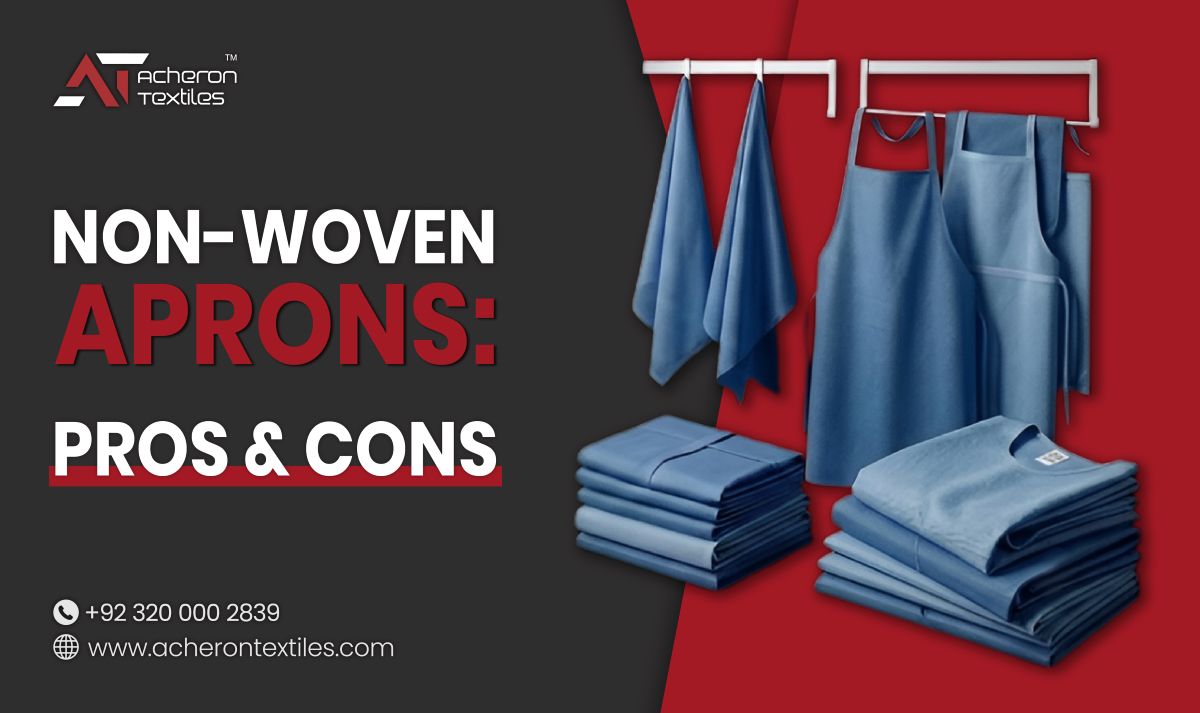
Non-woven aprons are made from non-woven fibers bonded together through mechanical, chemical, or thermal processes, rather than knitted or woven fabric. The method produces a lightweight yet durable material that is highly adaptive to a wide range of applications, including healthcare, laboratories, salons, and industries.
Moreover, non-woven aprons are produced at a lower cost and can be engineered for specific performance characteristics such as breathability, fluid resistance, or antistatic properties. Available in various apron patterns and apron designs, they are tailored to meet specific workplace requirements while maintaining functionality and aesthetics.
Common materials used in Non-Woven Aprons
Various material types are used in the production of non-woven aprons, each offering unique performance characteristics:
-
Spunbond Polypropylene (PP): The most common base for non-woven aprons that is lightweight, economical, and recyclable.
-
SMS Non-Woven fabric: A three-layer composite offering exceptional fluid resistance and barrier protection used in medical and laboratory safety aprons.
-
Biodegradable non-woven materials: They are made from post-consumer plastic bottles or eco-conscious fibers to reduce environmental impact, making them the most eco-friendly non-woven option for sustainable aprons.
Non-Woven Apron Pros
Eco-friendly option
Most non-woven aprons are made from recycled materials, minimizing environmental waste and making them a genuine win for sustainability. Also, non-woven aprons themselves are recyclable, making them particularly appealing to businesses seeking to reduce their environmental footprint and support sustainability initiatives.
Cost-effective production
Compared with the manufacturing process for traditional woven fabric aprons, that for non-woven aprons is generally less time-consuming and less complex. This aspect makes them an ideal option for high-volume applications with lower production costs.
Lightweight and comfortable
Non-woven aprons are exceptionally lightweight, making them an excellent choice for longer shifts. Their breathable, lightweight structure promotes airflow, enhancing comfort and productivity throughout the day.
Durability
Durable aprons are essential in high-demand working environments. The non-woven aprons are incredibly durable and resistant to wear and tear, providing reliable protection. This strength makes them ideal for various industries, including healthcare, food processing, and cleaning.
Versatility
Non-woven aprons are highly versatile. These multi-purpose aprons are used for a wide range of applications and are incredibly adaptable to various departmental needs. From full aprons in kitchens and safety aprons in workshops to protective gear in various industrial applications, they are valuable in every toolkit.
Customization
Non-woven aprons can be easily customized in terms of thickness, texture, or color. These aprons accept digital printing, screen printing, and heat transfer methods exceptionally well. This aspect allows manufacturers to create a wide variety of apron patterns and apron designs with customized logos, slogans, branding, and styles.
Strong barrier protection
SMS non-woven apron features a three-layer structure that provides strong protection against aerosols, particulates, and splashes. They are widely used in industries that require certified protective equipment such as chemical processing, healthcare environments, and pharmaceutical production. SMS non-woven aprons are designed to comply with international standards such as EN 13034, in which a melt-blown core layer plays a key role in capturing fine particles. Also, non-woven fabrics can be treated with water-resistant finishes to help them withstand moisture and spills.
Non-Woven Aprons Cons
Limited longevity
Although most non-woven aprons are admirably durable in light- to medium-duty settings, they generally cannot match the lifespan of premium woven textile aprons, particularly in the long run. The fabric bonding in non-woven fabrics is inherently less robust than the interlaced weave structure under repeated abrasion, stress, and frequent washing.
Not machine washable
Standard spunbond propylene aprons are not machine washable. The agitation, heat, and detergents used in laundry cycles can quickly weaken the fiber bond and compromise the structural integrity. Only spunlace non-woven aprons are designed to withstand machine washing, and that too at a lower temperature and on gentle cycles.
Prone to tearing
Non-woven aprons offer limited resistance to punctures and tears when exposed to sharp edges, tools, or focused mechanical stress. While the bonded fiber structure performs well in low-impact conditions, any initial damage can rapidly propagate across the material. This leads to further damage and reduces stability. Therefore, non-woven aprons are not suitable for demanding tasks involving sharp instruments, heavy industrial equipment, or rough handling.
Limited heat resistance
Non-woven apron materials typically provide minimal protection against high temperatures, making them less suitable for heavy-duty applications. Standard propylene aprons typically melt at low temperatures (around 160°C) and are unsuitable for environments with radiant heat, welding sparks, open flames, or hot-surface contact.
Environmental concerns for certain materials
Although many non-woven aprons are eco-friendly, some disposable non-woven aprons carry an environmental cost. Some variants, including petroleum-based fibers, have limited recycling options, contributing to environmental waste. Moreover, single-use polypropylene aprons are technically recyclable, but are often disposed of in general waste streams. This wastage is due to the absence of local PP recycling infrastructure or due to contamination with food residues, chemicals, or biological materials.
Less aesthetic appeal
Non-woven aprons tend to have reduced visual depth, flatter surfaces, and less drape than woven or knitted fabrics. Additionally, their structure lacks the directional stretch and precision required in many tailored or load-bearing applications. As a result, they are not suitable for situations where appearance, fit, and fabric behavior under tension are important.
Conclusion
Understanding the non-woven aprons’ pros and cons allows businesses to select the most appropriate protective apparel for their operational requirements. The eco-friendly nature, multi-purpose use, and versatility make them an excellent choice for various applications. With appropriate use, the material offers excellent practicality, performance and efficiency, but when it’s pushed beyond its capability, material failure and performance issues are predictable.
Acheron Textile offers premium-quality non-woven apron solutions designed to meet the evolving demands of the healthcare, industrial, and food service sectors. We are committed to delivering products that ensure comfort, reliable performance, and protection.