



Surgical gowns are an integral part of the healthcare environment, as they protect healthcare professionals from body fluids, microorganisms, blood, and other contaminants during operations. However, choosing the right surgical gown significantly impacts patient safety, operational efficiency, and staff protection. Among the many options available, reinforced and non-reinforced surgical gowns are the most common and are designed for different levels of exposure and medical applications. If you want to know the main differences between reinforced and non-reinforced surgical gowns, this guide breaks them down for you.
What is a Reinforced Surgical Gown
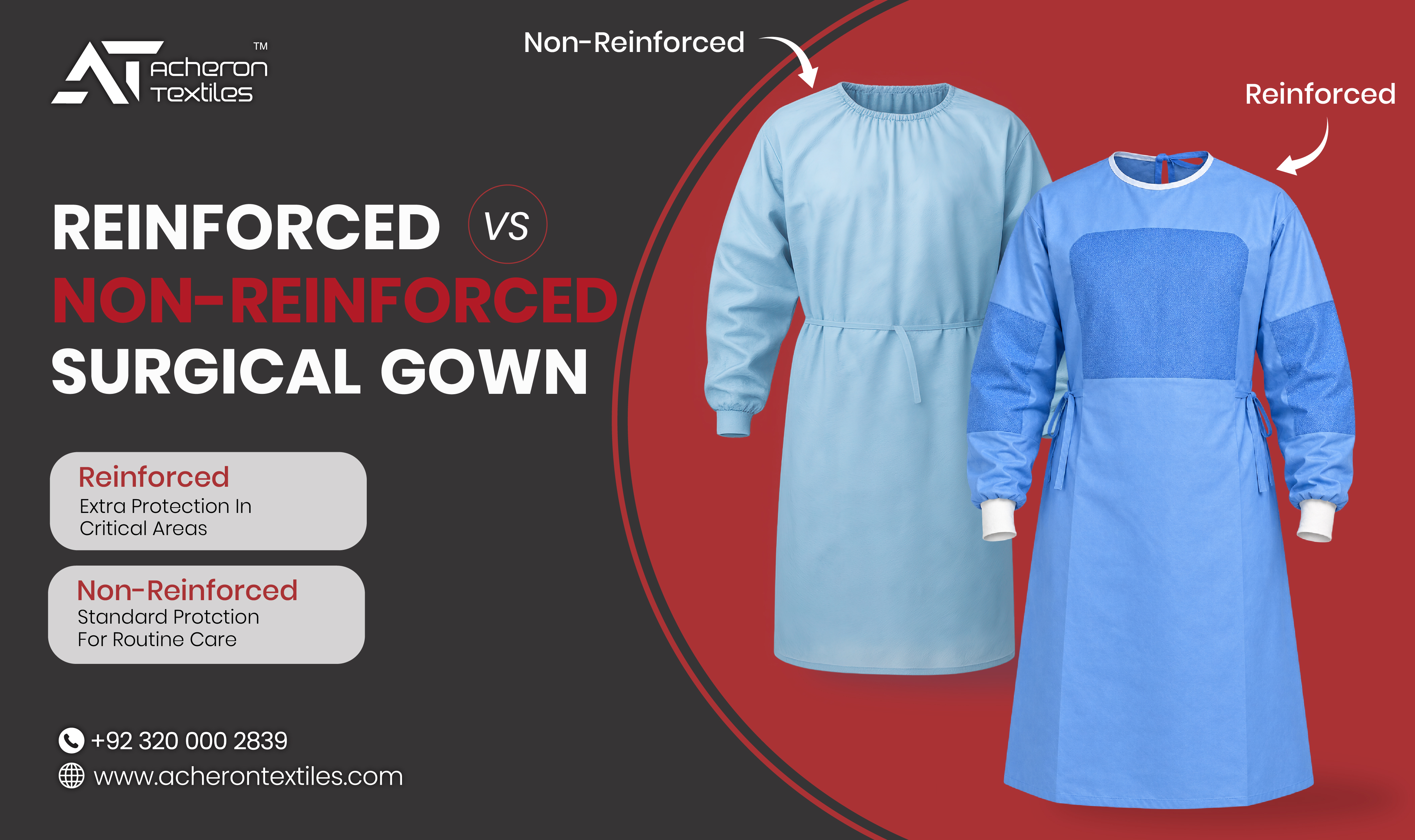
A reinforced surgical gown provides an extra layer of protection, enhancing barrier protection in high-risk areas. These reinforced sections are usually positioned around the chest, forearms, abdomen, lap area, or other areas that may come in contact with fluids during surgical procedures. However, these surgical gowns are slightly heavier than non-reinforced gowns because they contain additional material.
Characteristics of Reinforced Surgical Gown
-
Increased fluid resistance
-
Stronger barrier protection
-
Enhanced durability
-
Additional protective layers
-
Adheres to higher hygienic standards like AAMI
-
Available in disposable and reusable options
What is a Non-Reinforced Surgical Gown
A non-reinforced surgical gown is typically made from a single-layer material with a uniform fabric construction and no additional protective layers. They are made of lightweight, breathable fabric, making them well-suited for procedures with a lower risk of fluid exposure.
Characteristics of Non-Reinforced Surgical Gown
-
Lightweight construction
-
Breathable fabric
-
Greater mobility
-
Suitable for lower to moderate risk exposure
-
Cost-effective
-
Comfortable for extended wear
Gown Material and Fabric Types
Gown materials play a vital role in surgical gown performance. Common gown materials and fabric types used for manufacturing reinforced and non-reinforced gowns include:
-
Nonwoven Polypropylene: Disposable, cost-effective, and lightweight
-
Polyester or Polyester-Cotton Blends: Enhance durability in reusable gowns
-
Laminated Fabrics: Essential for reinforced areas for improved fluid resistance
-
Layered or SMS (Spunbond-Meltblown-Spunbond) Fabric: Enhances barrier protection
Reinforced vs Non-Reinforced Surgical Gowns: Key Differences
We highlight the key differences between reinforced and non-reinforced surgical gowns to help you choose the right one for the job.
-
Barrier Protection and Fluid Resistance
Healthcare professionals are exposed to fluids, blood, and other contaminants during various surgical procedures. Therefore, it is crucial to consider barrier protection and fluid resistance when selecting a surgical gown for a specific surgical procedure.
Reinforced surgical gowns are engineered to meet the Level 3 or Level 4 AAMI standard with additional protective layers. As a result, they provide superior protection against blood and fluid penetration in critical areas.
Non-reinforced surgical gowns generally fall into the Level 1 or Level 2 protection categories, providing effective protection for minor or low-risk exposure.
-
Breathability and Comfort
Comfort matters for healthcare professionals and staff, as they often wear surgical gowns for several hours. Design features like adjustable neck closures, secure cuffs, and ergonomic construction also contribute to a comfortable fit, regardless of gown type.
Reinforced surgical gowns contain an extra layer, but thoughtful design features balance breathability, protection, and mobility.
Non-reinforced surgical gowns are breathable and lightweight, made from a uniform fabric that improves overall comfort and feel.
-
Antimicrobial Properties
Modern surgical gowns are usually coated with antimicrobial properties to inhibit the growth of fungi, bacteria, and other microorganisms. Both reinforced and non-reinforced surgical gowns can be designed with the coatings of antimicrobial coatings to reduce the risk of cross-contamination.
However, reinforced surgical gowns standardize antimicrobial treatments during manufacturing, given their use in high-risk working environments.
-
Durability Testing
Durability testing is important because it determines how well a surgical gown performs under specific operating room conditions. All types of surgical gowns undergo extensive durability testing, including tensile strength testing, hydrostatic pressure testing, and sterilization cycle testing, before they reach an operating room.
However, reinforced surgical gowns require an extra bonding or lamination stage to align the reinforcement panels and seal them to the base garment. Reinforced gowns also offer higher abrasion resistance and tensile strength, making them suitable for high-stress areas.
Reinforced vs Non-reinforced Surgical Gowns: Comparison Table
|
Features |
Reinforced Surgical Gown |
Non-reinforced Surgical Gown |
|
Barrier protection |
Higher in reinforced areas |
Consistent uniform protection |
|
Durbaility |
Higher |
Lower |
|
Breathable fabric |
Lower in reinforced areas |
Higher |
|
Protection level |
Level 3-4 (high risk) |
Level 1-2 |
|
Fluid Resistance |
High |
Moderate |
|
Best for |
High-risk environment |
Low-Moderate risk environment |
|
Design features |
Includes additional protective panels |
Uses a uniform fabric construction |
|
Medical Applications |
High-risk, longer procedures |
General surgery, lower-risk applications |
Which Surgical Gowns Should You Choose
The appropriate choice of surgical gown depends on the exposure risk, medical application, and required barrier protection. Choose a reinforced surgical gown for greater protection and fluid resistance in high-risk environments and lengthy surgical procedures.
Choose a non-reinforced surgical gown for general, minor outpatient procedures with lower anticipated exposure, low fluid exposure, and basic barrier protection.
Conclusion
The choice between reinforced and non-reinforced surgical gowns comes down to selecting the right gown for the right procedure. Reinforced surgical gowns are ideal for enhanced fluid resistance and barrier protection in high-risk surgical procedures. Non-reinforced surgical gowns offer better comfort, breathability, and cost savings for low-risk work environments.
Acheron Textile offers a wide range of premium-quality surgical gowns designed to meet the real demands of healthcare settings. Our products adhere to strict quality protocols while ensuring maximum comfort, durability and practical functionality where it matters most.