



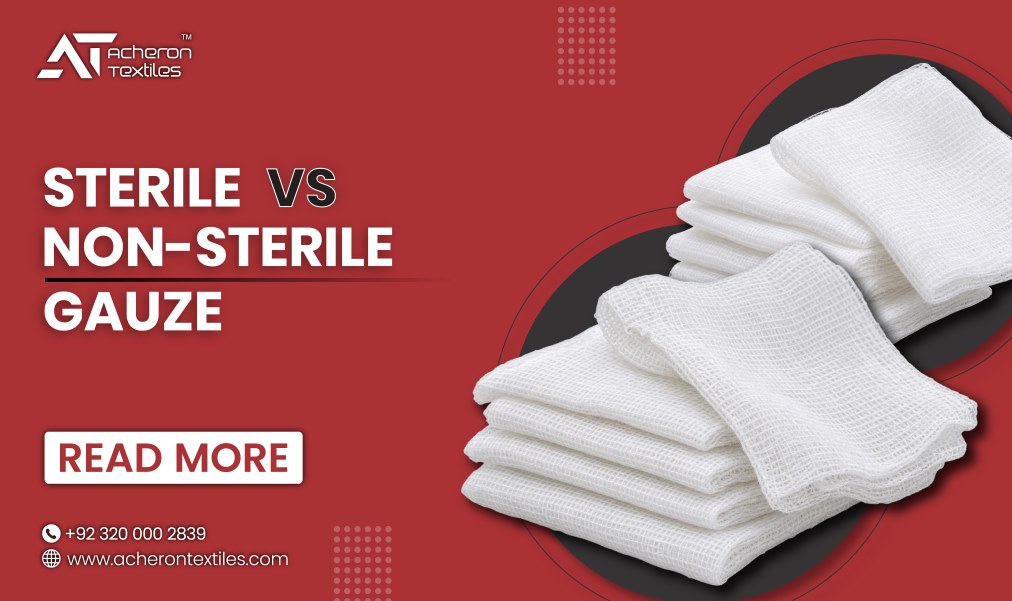
Gauze is one of the most widely used medical textile products in general healthcare applications as well as first-aid kits at home. However, not all gauze is the same, and choosing the right one makes a lot of difference than it seems. Sterile and non-sterile gauze look similar but serve distinct purposes. If you're still finding it difficult to choose the right one, this guide explains all the key differences, uses and best practices that keep the patient safe. Let's begin!
What is a Sterile Gauze
A sterile gauze is specially processed to be completely free from microorganisms, including viruses, bacteria, and spores. These gauzes play a vital role when infection prevention is essential because they use highly validated methods to eliminate any viable microorganisms.
Sterile gauzes are usually made from cotton gauze or other medical-grade material and are available in various forms, including gauze rolls, pads, gauze swabs and gauze sponges. After manufacturing, they are typically sealed in individual, protective packaging and are sterilized by a validated method such as:
-
Gamma irradiation
-
Ethylene Oxide (EtO) gas
-
Steam sterilization (autoclaving)
When to use Sterile Gauze
-
Surgical site care including post-surgical dressings and incision management
-
Open wound care, cuts and lacerations
-
Burn dressing management
-
Blood absorption and wound drainage
-
Chronic wounds and pressure ulcers
-
Invasive procedures, including catheter care, IV insertion, and injections
What is a Non-Sterile Gauze
Non-sterile gauze is manufactured under hygiene conditions, but they do not undergo validated sterilization protocols. These gauzes are usually suitable for minor injuries or situations where sterile dressing is not necessary, such as superficial skin injuries, abrasions, or blisters.
Non-sterile gauze provides a protective barrier that helps absorb any wound fluid and protects the skin from dirt and external irritation. However, these gauzes are not recommended for injuries or open surgical wounds that have a higher risk of infection. These gauzes can be a practical choice for routine wound care where sterility is not a requirement.
When to use Non-Sterile Gauze
-
Cleaning intact skin before or after non-invasive procedures
-
Applying ointments to intact skin
-
Padding and cushioning under casts, splints, and bandages
-
General cleaning and prep
-
Absorbing liquids in routine non-sterile procedures
-
General-purpose first-aid applications and home wound care
-
Laboratory, cosmetic, and industrial uses
Sterile vs. Non-Sterile Gauze: What's the Difference
Here are some major differences between sterile and non-sterile gauze to help you make an informed decision:
-
Level of cleanliness
Sterile dressings are processed to be completely free of microorganisms, while non-sterile gauze is not sterilized and may carry some harmless bacteria. However, sterile gauze is a better option when minimizing contamination is required.
-
Manufacturing and Processing
Sterile gauze is made under strict sterilization protocols and then packaged to maintain its sterility until use. Non-sterile gauze is produced under quality and hygiene controls but does not undergo the same sterilization process.
-
Intended use
Sterile gauze is usually used for open wounds, burns, surgical sites, and other scenarios where the risk of infection is high. Non-sterile gauzes are well-suited for minor injuries or wounds, padding where the skin is still intact and where sterility matters less.
-
Cost and Accessibility
Sterile gauze is higher in price because of its more demanding process. Non-sterile gauze is lower in price, easier to find and commonly available in bulk, making it suitable for general first-aid supplies and routine applications.
Sterile vs. Non-Sterile Gauze: Comparison Table
Here's a quick comparison table between sterile and non-sterile gauze for a better understanding:
|
Features |
Sterile Gauze |
Non-sterile Gauze |
|
Micro-organisms free |
Yes |
No |
|
infection prevention |
Suitable when sterility is required |
Suitable when sterility is not necessary |
|
Open wounds |
Appropriate |
Not appropriate |
|
Packaging |
Sealed, individually packed |
Bulk or Standard packing |
|
Cost |
Higher |
Lower |
|
Best Use Case |
Open wounds, burns, surgical site |
Cleaning, padding, intact skin minor injuries |
Why Sterility Matters for Infection Prevention
An open wound site is an easy entry point for bacteria and microorganisms. Using inappropriate dressing can pose an increased risk of infection and can cause wound healing complications such as:
-
Delayed wound healing
-
Localized infection, including swelling, redness, or pus
-
Cellulitis or abscess formation
-
May cause sepsis in severe cases
Therefore, healthcare workers follow an aseptic technique, which is a set of practices intended to prevent microorganisms from entering the wound site or sterile body areas. This technique involves proper hand hygiene, maintaining a sterile working environment, limiting unnecessary contact with sterile materials, and adhering to strict healthcare guidelines.
Wrap Up
Understanding the difference between sterile and non-sterile gauze is crucial for infection control and appropriate wound management. Sterile gauze is essential for applications where sterility cannot be compromised, whereas non-sterile gauze is suitable for general cleaning and prep and other non-sterile uses. Matching the appropriate product to the required applications prevents bacterial contamination, supports speedy recovery, and supports effective wound-care practices.
At Acheron Textile, we offer a wide range of medical-grade sterile gauzes and non-sterile gauzes. From cotton gauze in different widths, weaves, and ply options to other high-grade absorbent gauze rolls, we have a versatile range available in both sterile and non-sterile formats for clinics, hospitals, distributors, and private-label partners.
FAQs
How long does sterile gauze stay sterile?
Sterile gauze stays sterile as long as the packaging is intact and undamaged, provided it is stored correctly according to the manufacturer's guidelines and used within the specified shelf life.
What is non-sterile gauze used for?
Non-sterile gauze is mainly used for cleaning intact skin, applying appropriate topical products, general cleaning and prep and other routine healthcare tasks where sterility is not required.
Do you offer customized sterile and non-sterile gauzes?
Yes. We customize the ply, dimensions, material, design, width, folding styles, packing and other specifications.
Can we order sterile and non-sterile gauzes in bulk?
Absolutely. We accept bulk and wholesale orders for sterile and non-sterile gauzes tailored to the requirements of distributors, retailers, hospitals and medical supply companies.