



When selecting textiles, the discussion around woven vs. non-woven fabrics is a crucial consideration for manufacturers, designers, and consumers alike. Both serve essential roles in modern manufacturing, each with unique characteristics, advantages, and applications. This blog explores the key differences, features, benefits, and applications of woven and nonwoven fabrics to help you make an informed decision with confidence.
What is Woven Fabric
Woven fabrics are produced by interlacing two or more sets of yarns- the warp and the weft- at right angles on a loom. This traditional technique produces durable, strong fabrics with a stable grid-like structure.
Woven fabrics are usually made from natural fibers such as linen, cotton, wool, or silk, or from synthetic materials such as nylon or polyester. Moreover, the different types of fabric materials it produces depend on the type of weave, including:
-
Twill Weave: This weave is known for its diagonal rib pattern, creating a durable fabric with a distinctive pattern, often used in denim and gabardine.
-
Plain Weave: This is one of the most common weaving styles, created with a simple over-under pattern, providing a balanced, sturdy fabric for diverse applications.
-
Satin Weave: Recognisable for a smooth, lustrous surface, satin weave produces luxurious fabrics with excellent drape and softness, making it an ideal choice for formal attire and linens.
Common Characteristics of Woven Fabrics
-
Provides a strong and durable structure
-
Smooth or textured surface texture
-
Offers exceptional breathability in hot weather as well as warmth in cooler temperatures
-
Available in diverse textures, colors, patterns, and finishes.
-
High resistance to wear and tear
Woven Fabric Uses
Woven fabrics are used in a wide range of applications, depending on the unique attributes, including:
-
Clothing
-
Upholstery
-
Bed sheets
-
Home furnishings
-
Industrial settings
What is Non-Woven Fabric
Unlike woven materials, non-woven fabrics are not knitted or woven. Instead, fabrics are bonded together through chemical, mechanical, or thermal manufacturing methods. This textile includes materials such as interfacing, synthetic leather, and fleece, which are widely used in the clothing sector, as well as automotive, healthcare, filtration, and construction. Also, they are primarily designed as absorbent materials, making them a perfect choice for hygiene and medical applications such as diapers, medical dressings, and wipes.
Moreover, non-woven fabrics are manufactured using specialized layering techniques. Each technique contributes to the fabric’s final characteristics. These techniques include:
-
Spunbond process: In this process, thermoplastic filaments are stretched, extruded, and laid onto a conveyor belt before being heated and chemically treated to create strong, durable fabric.
-
Meltblown process: Molten polymers are extruded through fine nozzles to form microfibers. These fibers are then collected onto a conveyor system where they naturally bond as they cool, producing a soft fabric with fine texture.
-
Needle Punching: This mechanical method uses barbed needles to interlock fibers, creating a dense fabric for heavy-duty applications.
-
Chemical bonding: In this process, fibers are bonded using chemical agents or adhesives, creating non-woven fabrics with enhanced properties, such as strength and water resistance.
Common Characteristics of Non-Woven Fabrics
-
Excellent liquid absorption properties
-
Cost-effective production
-
Offers sustainability and eco-friendliness
-
Ensures breathability
-
Lightweight material
Non-woven Fabric Uses
Non-woven fabrics are known for their versatility, which makes them suitable for countless industries, including:
-
Clothing
-
Home textile (upholstery, bedding, curtains)
-
Industrial applications (automotive textiles, conveyor belts)
-
Outdoor products
-
Construction
-
Can be engineered for filtration or insulation
Woven vs Non-Woven Fabrics – Key Differences
Distinguishing between woven and nonwoven fabrics is crucial when selecting the right material for a given application. Although both fabrics offer unique characteristics and uses, understanding the differences makes identification and informed decision-making much easier. Let’s debunk the major differences:
Visual Appearance
-
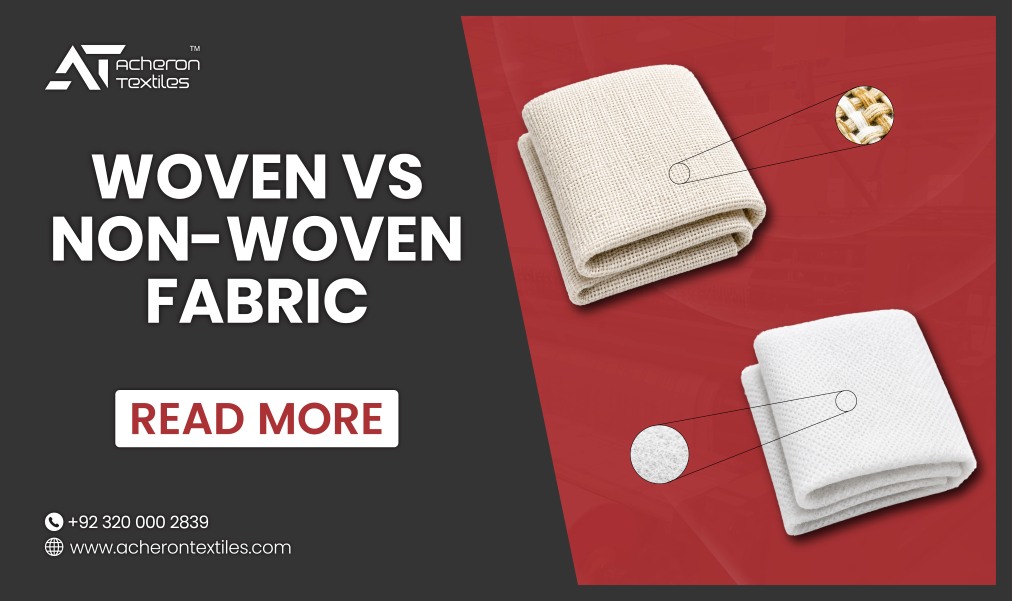
Woven fabric: Features a distinct grid-like structure created by the interlacing of warp (lengthwise) and weft (crosswise) yarns.
-
Non-woven fabric: Lacks a structured appearance and is usually composed of randomly arranged fibers.
Texture
-
Woven fabric: Slightly textured feel on one side and smoother on the other.
-
Non-woven fabric: Maintains a uniform texture across the surface, which can be soft or fibrous, depending on the manufacturing method.
Flexibility
-
Woven fabric: Offers greater flexibility than non-woven fabric and can be bent or draped in various directions.
-
Non-woven fabrics: Stiffer and less pliable due to their bonded-fiber structure.
Manufacturing Method
-
Woven fabric: The production of woven fabrics includes yarn preparation, weaving method, and finishing processes that enhance their softness, wrinkle resistance, flame resistance, and color retention.
-
Non-woven fabric: The production of non-woven textiles is generally faster and more automated than that of woven fabrics. It involves layering techniques, followed by bonding processes using heat, chemicals, or pressure, accompanied by surface treatment to improve absorption and performance.
Durability
-
Woven fabric: Offers exceptional durability and is meant to last for years.
-
Non-woven fabric: More prone to tearing under heavy stress. Most non-woven fabrics are designed for single-use or short-term applications.
|
Feature |
Woven Fabric |
Non-woven Fabric |
|
Structure |
Interlaced yarns |
Bonded fibers |
|
Durability |
Very strong |
Moderate strength |
|
Surface texture |
Smooth, patterned |
Soft, paper-like |
|
Production speed |
Slower |
Faster |
|
Cost |
Usually higher |
Usually lower |
|
Breathability |
Often higher breathable |
Depends on the bonding method |
|
Reusability |
Reusable |
Often disposable |
Woven vs Non-Woven Fabric: Which One to Choose
The choice between woven and non-woven fabric depends on your intended application. Choose woven fabric when you need:
-
Structured materials
-
Decorative appearance
-
Long-term durability
-
Reusable textiles
-
Fashion garments
Choose non-woven fabric when you need:
-
Cost-effective manufacturing
-
High absorbency
-
Disposable products
-
Single-use craft
-
Filtration performance
-
Lightweight materials
Conclusion
When it comes to choosing between woven vs. non-woven fabric, neither fabric is “better” than the other. It’s simply about selecting the right material for the right purpose. Woven textiles offer a permanent structure that is ideal for long-term use, breathability, and strength. On the other hand, non-woven textiles offer exceptional affordability and efficiency and are a great performance solution.
At Acheron Textile, we offer premium-quality fabrics tailored for diverse commercial, industrial, and fashion applications. We combine innovation, reliability, and exceptional craftsmanship and provide an extensive range of quality fabrics designed to meet your every need.